If you have ever managed a demolition or civil project in Sydney, you know the drill. You pull apart a slab, rip up some concrete, and suddenly you are staring at a mountain of rubble that needs to go somewhere. The default move for most contractors is to load it onto trucks and send it to a tip. But that default is costing you more than you think.
At Definitive Contracting, we have been running onsite crushing operations across Sydney and the Gold Coast for years. We have seen firsthand how bringing the crusher to the job site, rather than trucking material to a recycling facility, cuts project costs and keeps timelines tight. Here is a practical breakdown of why onsite crushing makes sense for most projects.
The Real Cost of Trucking Waste Off Site
Let us start with the numbers that actually matter on your project budget. When you truck demolition waste to a tip or recycling yard, you are paying for:
- Truck hire or cartage rates: Depending on the distance to the nearest facility, you could be looking at $80 to $150 per tonne just in transport. For a mid-size demolition producing 500 to 1,000 tonnes of concrete, that adds up fast.
- Tip fees or gate rates: Recycling yards charge gate fees. In Greater Sydney, clean concrete recycling runs $15 to $40 per tonne, but contaminated material or mixed waste pushes that higher.
- Double handling: Loading trucks on site, transporting, unloading at the yard, then buying back recycled aggregate for fill. You are paying to move the same material twice.
- Downtime and scheduling: Waiting for trucks, coordinating with tip operating hours, dealing with traffic on Sydney roads. Every hour a machine sits idle because trucks are not available is lost productivity.
On a typical Sydney demolition job producing 800 tonnes of concrete waste, the total off-site disposal and backfill cost can easily hit $60,000 to $100,000. That is a significant chunk of any project budget.
How Onsite Crushing Changes the Equation
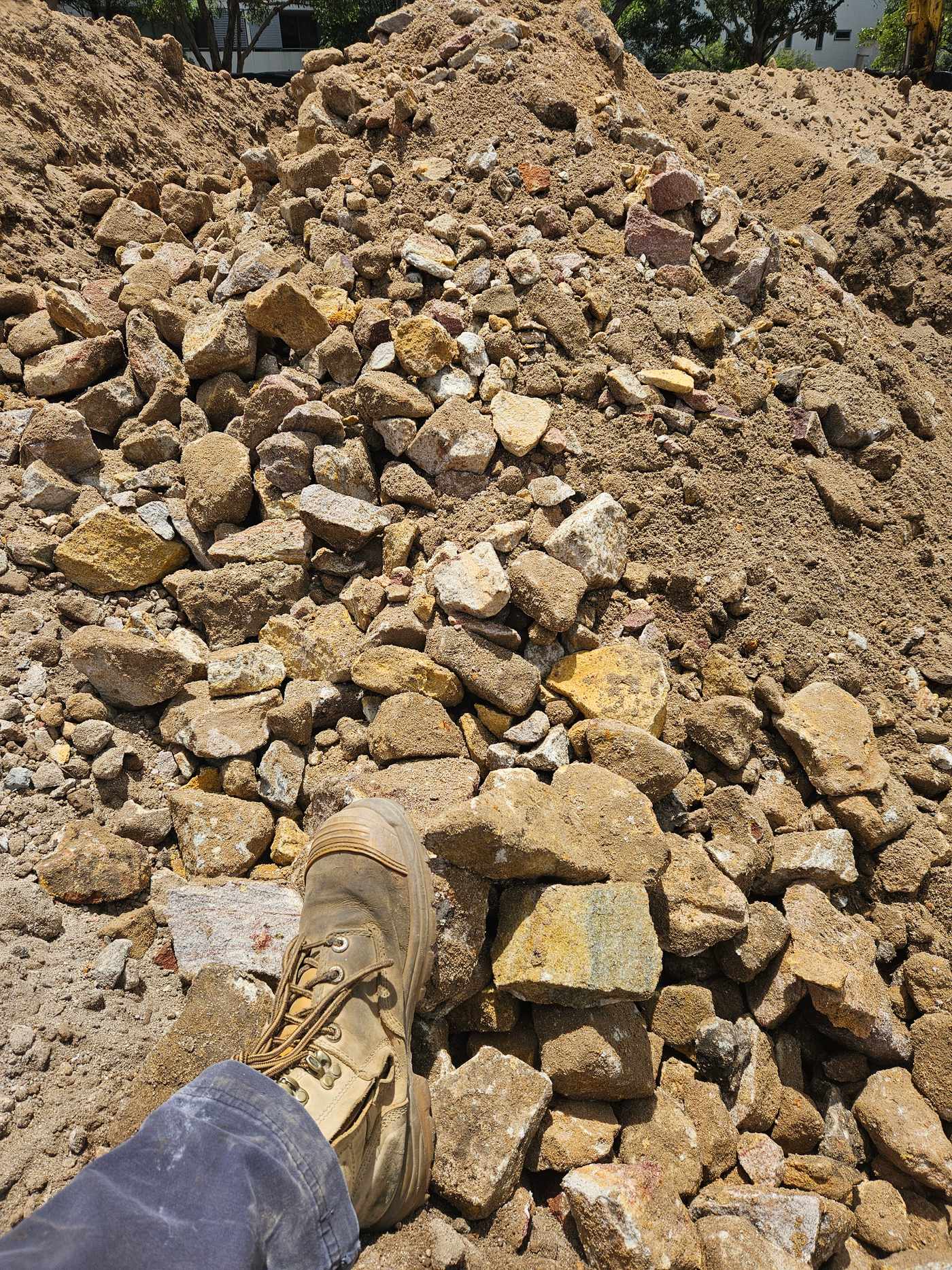
When you bring a mobile crusher to the job, the economics shift dramatically. Instead of loading trucks, you feed the demolished concrete straight into the crusher. The output is clean, graded aggregate that you can use immediately as backfill, road base, or drainage material right there on site.
Here is what that looks like in practice:
- No transport costs: The material never leaves the site. Zero truck movements for waste disposal.
- No tip fees: You are not paying anyone to accept your waste because it is no longer waste. It is a reusable product.
- No buying back aggregate: The crushed material replaces the imported fill you would otherwise need to purchase and have delivered.
- Faster project timelines: No waiting for trucks. The crusher processes material as fast as your excavator can feed it.
For that same 800-tonne job, onsite crushing typically costs 40% to 60% less than the truck-and-tip approach. On larger jobs, the savings are even more pronounced.
Definitive's Crushing Fleet
We run purpose-built mobile crushers that are designed for exactly this kind of work. Our fleet includes:
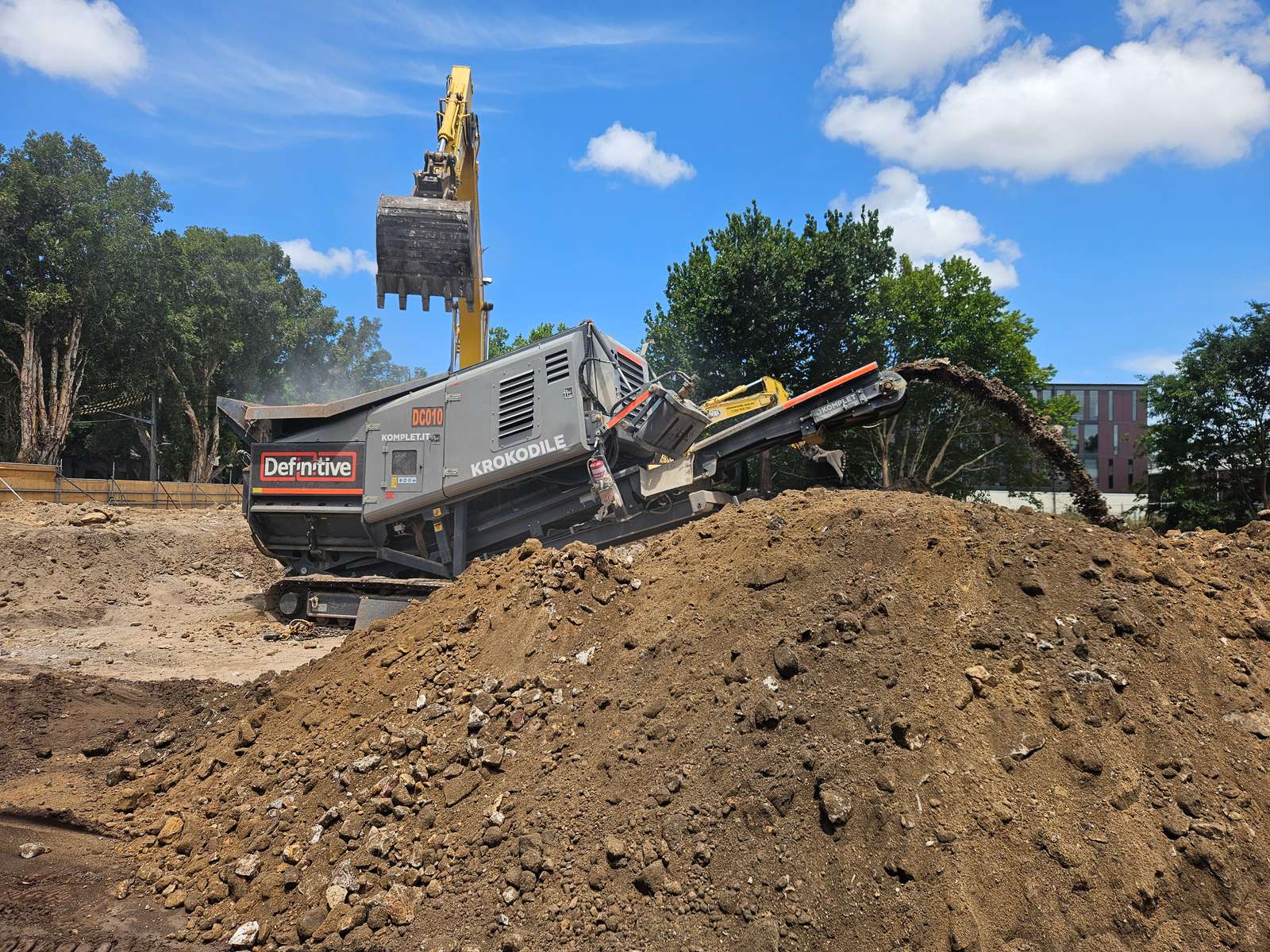
- Komplet Krokodile: A compact, powerful jaw crusher that handles concrete, brick, rock, and demolition waste. It is ideal for tighter sites where space is limited, which covers a lot of Sydney construction projects.
- Komplet Impaktor: An impact crusher that produces a finer, more consistent product. When you need material graded to a specific size for road base or engineered fill, this is the machine for the job.
Both units are fully mobile and can be transported to site on a standard float. Setup takes a couple of hours, and from there, you are processing material the same day. We supply the crusher, the operator, and the maintenance. You supply the excavator to feed it.
Environmental Benefits Worth Noting
Beyond the cost savings, onsite crushing has genuine environmental advantages that are increasingly relevant on government and Tier 1 projects where sustainability reporting matters.
- Reduced truck movements: Fewer trucks on the road means lower carbon emissions and less impact on local communities near your site. On some projects, this can be a planning condition.
- Waste diversion: Crushing and reusing demolition material on site means it does not end up in landfill. For projects with waste minimisation targets, this is a straightforward way to hit those numbers.
- Reduced demand for virgin materials: Every tonne of crushed concrete you reuse as fill is a tonne of quarry product you do not need to extract and transport.
We have seen more and more builders and civil contractors listing onsite crushing in their project Environmental Management Plans. It is becoming standard practice rather than an afterthought.
When Does Onsite Crushing Make Sense?
Onsite crushing is not the right call for every single job. Here are the scenarios where it delivers the most value:
- Demolition projects producing 200+ tonnes of concrete or masonry: Below that volume, the mobilisation cost of the crusher can outweigh the savings. Above it, the economics are strongly in your favour.
- Sites where you need backfill: If you are demolishing a structure and then need to fill the void or build up levels, crushing on site is a no-brainer. You are turning waste into the exact product you need.
- Projects with tight access or truck movement restrictions: Inner-city Sydney sites often have council restrictions on truck movements. Crushing on site removes hundreds of truck trips from the equation.
- Remote or regional jobs: When the nearest tip is 50km or more away, transport costs make off-site disposal extremely expensive. We service projects across the Sydney basin and up to the Gold Coast.
What You Need on Site
Running a mobile crusher does require a few things from your end:
- An excavator (13 tonne minimum): Needed to feed the crusher and manage stockpiles. Most demolition sites already have one.
- Space for the crusher and stockpiles: The crusher itself needs roughly a 10m x 5m footprint. You will also need room for input and output stockpiles.
- Clean feed material: The better you separate your demolition waste (removing timber, plastic, steel reo), the better the output product. We can advise on best practice for feed preparation.
Getting Started
If you have a demolition or civil project coming up in Sydney, the Gold Coast, or anywhere in between, it is worth running the numbers on onsite crushing before you commit to a trucking and disposal plan. Give us a call on 0401 343 691 or use the crushing cost calculator on our website to get a quick estimate.
We will come to site, assess the material volumes, and give you a straight answer on whether onsite crushing makes sense for your job. No obligation, no sales pitch. Just practical advice from blokes who do this every day.