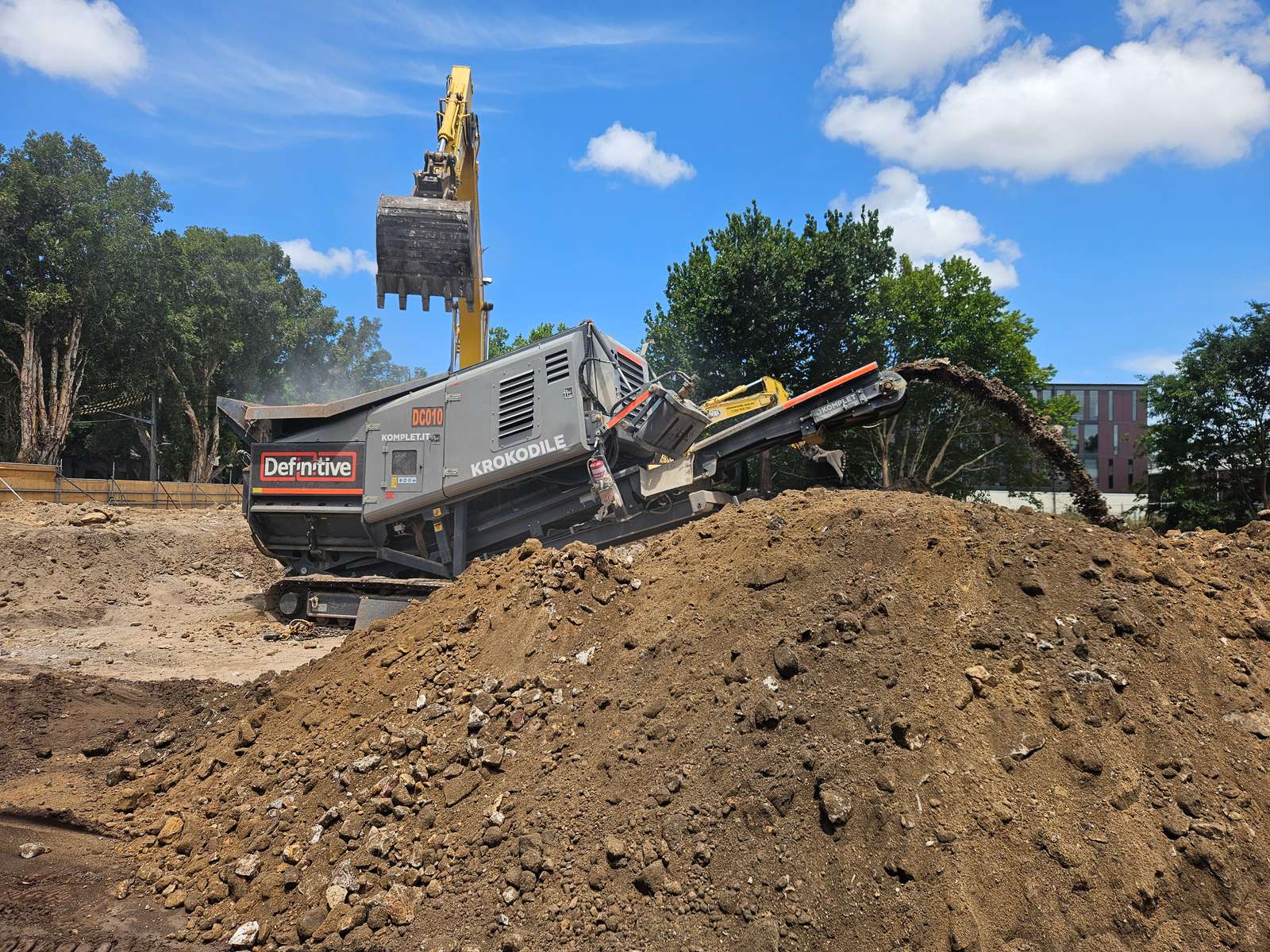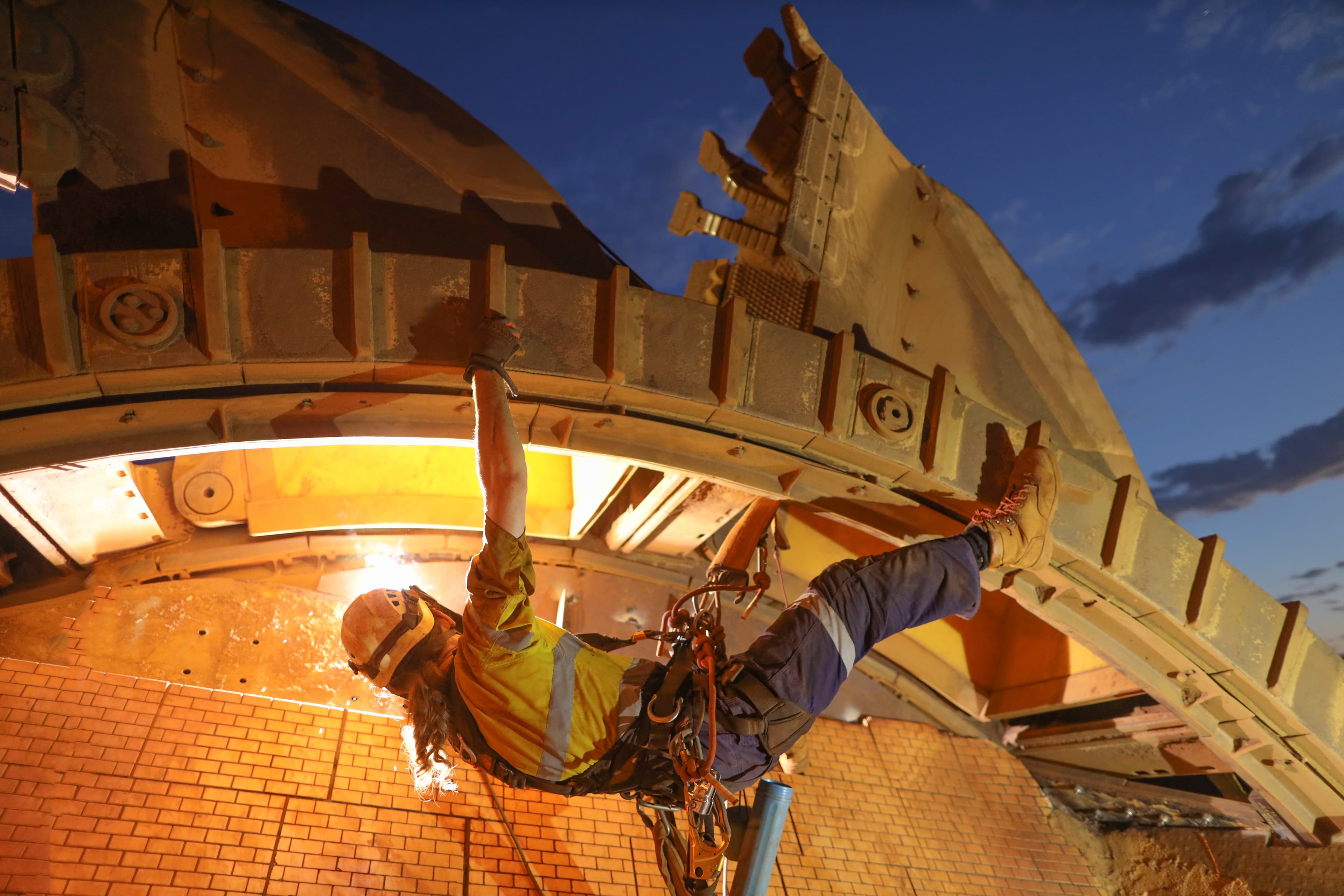
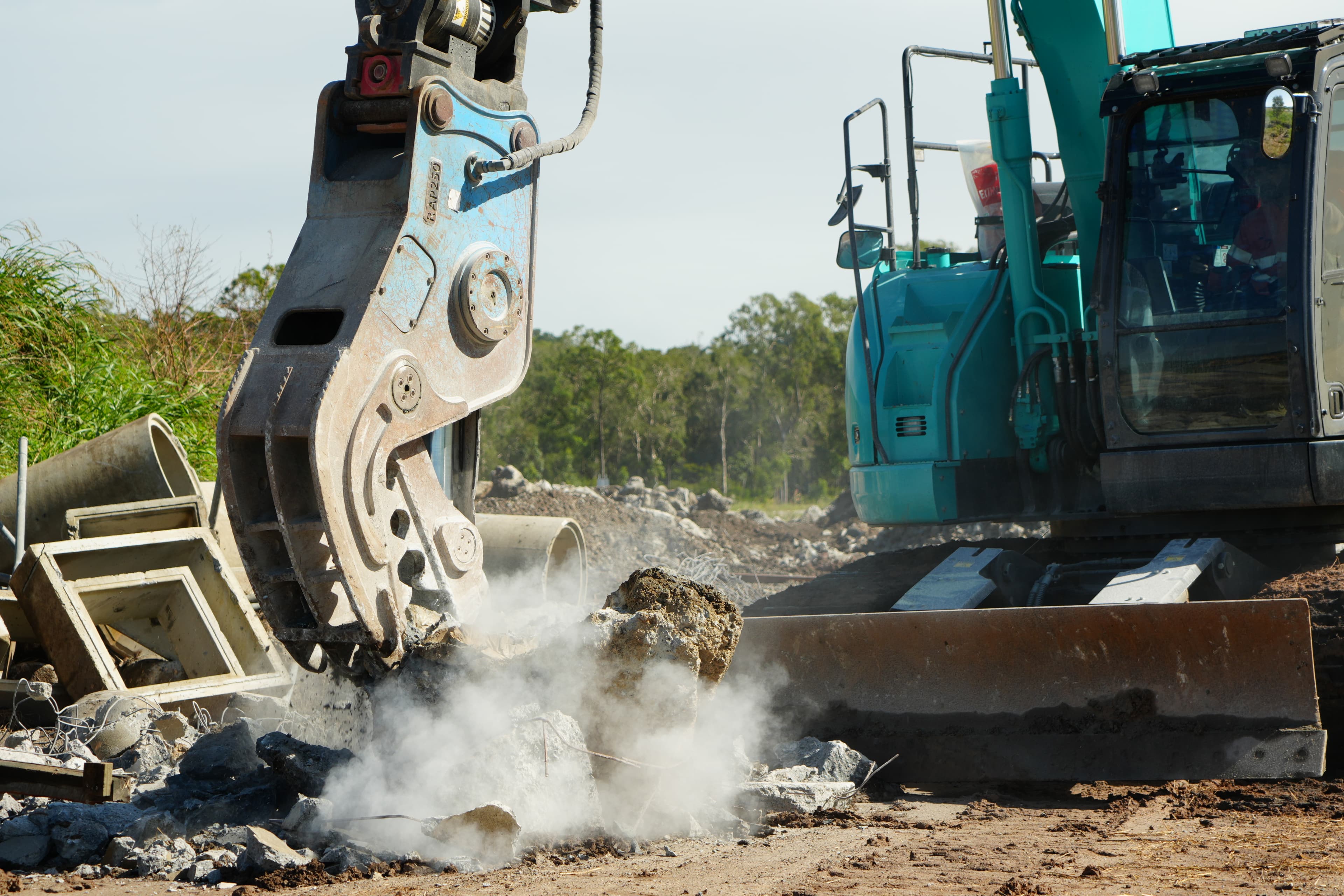
It is 6:30 in the morning. Your 30-tonne excavator will not start. The hydraulic pump on the crusher has blown a seal. A track has thrown itself off a dozer. Whatever the scenario, you have got a machine down and a crew standing around waiting. The meter is running on labour hire, subcontractor delays, and project penalties.
At Definitive Contracting, we provide 24/7 emergency breakdown support across Sydney and the Gold Coast. We have been doing this long enough to know that when you call with a breakdown, you do not want a runaround. You want to know three things: how fast can someone get there, can they actually fix it, and what is it going to cost. Let us walk through what the process looks like from your end.
What Happens When You Call
When you ring our breakdown line, you will speak to someone who understands machinery. Not a call centre, not a receptionist reading from a script. We will ask you a few quick questions to assess the situation:
- What machine is it? (Make, model, and what attachment or function is affected)
- What happened? (Did it stop suddenly, was there a noise, is there visible damage or fluid leaks?)
- Where is the site? (Address and any access restrictions we need to know about)
- Is anyone at risk? (Fire, fluid spill, or machine in an unstable position)
From that conversation, we can usually form a pretty good idea of what has failed and what parts and tools we need to bring. Our aim is to have a technician on the road within the hour for urgent callouts in the Sydney metro and Gold Coast areas.
Response Times: What Is Realistic
We are not going to promise you a 30-minute response time to every corner of NSW and QLD. That would not be honest. Here is what we consistently deliver:
- Sydney metro (Parramatta to Penrith, North Shore to Sutherland): 1 to 2 hours typical response.
- Greater Sydney (Blue Mountains, Central Coast, Wollongong corridor): 2 to 3 hours typical response.
- Gold Coast and SE Queensland: 1 to 2 hours from our Gold Coast base.
- Regional and remote sites: Same day where possible. For ongoing projects in remote areas, we can arrange permanent on-site technician coverage.
These are real numbers based on years of callout data, not best-case marketing claims. Traffic, time of day, and parts availability all play a role, and we will be upfront about expected arrival time when you call.
What the Mobile Workshop Carries
Our service trucks are not utes with a toolbox on the back. They are fully equipped mobile workshops built to handle the majority of repairs on site without needing to go back to the shop. Here is what a typical Definitive service vehicle carries:
Diagnostic and Testing Equipment
- Hydraulic pressure testing kits (0 to 600 bar)
- Multimeters and auto electrical diagnostic tools
- Laser alignment and measurement tools
- Manufacturer diagnostic software for major brands (Hitachi, Volvo, Komatsu, CAT, Kubota)
Hydraulic Repair
- Hose crimping machine with a full range of fittings (BSP, JIC, Komatsu, CAT fittings)
- Hydraulic hose stock in common sizes
- Seal kits for common cylinder sizes
- Hydraulic oil (46 and 68 grade)
Mechanical and Electrical
- Full hand tool sets (metric and imperial)
- Oxy-acetylene cutting and heating
- MIG and stick welding capability
- Portable air compressor
- Common filters, belts, and consumables for major equipment brands
- Engine oils and coolant
Lifting and Access
- Hydraulic jacks and stands rated for heavy equipment
- Chain blocks and lever hoists
- Portable lighting for after-hours work
The goal is simple: carry enough gear to diagnose and repair 80% to 90% of common breakdowns on the first visit. For the remaining cases that need a specific part or specialist tooling, we can usually source what is needed overnight and return the following morning.
Common Breakdown Scenarios We See
After thousands of callouts, certain patterns emerge. Here are the breakdowns we attend most frequently and what is typically involved in the repair:
Hydraulic Hose Failures
By far the most common callout. A blown hose can dump 200 litres of hydraulic oil in minutes, shutting the machine down completely. We carry hose stock and a crimping machine on every truck, so most hose repairs are completed within 30 to 60 minutes on site. We also carry spill kits to manage the environmental side.
Electrical and Starting Issues
Flat batteries, faulty alternators, blown fuses, corroded wiring. These are common on equipment that sits in dusty, wet, or coastal environments. Our auto electrical diagnostic gear lets us trace faults quickly rather than guessing and swapping parts.
Track and Undercarriage Problems
Thrown tracks, seized idlers, worn sprockets. Track work is heavy, physical repair work that requires the right tools and experience. We can re-track most machines on site with our portable hydraulic equipment.
Engine Overheating
Blocked radiators, failed water pumps, blown head gaskets. We carry coolant, hoses, and thermostats for common engines. Radiator blockages can often be cleaned on site with a portable pressure washer.
Hydraulic Cylinder Leaks
Scored rods, worn seals, damaged chrome. Minor seal replacements can sometimes be done on site. For more serious cylinder damage, we will remove the cylinder, send it for reconditioning, and fit a loan unit to keep you running while the original is repaired.
What Breakdown Support Costs
We charge a callout fee plus hourly labour, which we will quote before dispatching a technician so there are no surprises. Parts are charged at cost-plus, and we provide receipts for everything. After-hours and weekend callouts attract a higher rate, which is standard across the industry.
For sites with multiple machines or ongoing projects, we offer maintenance contracts that include priority breakdown response. These contracts reduce the per-callout cost and guarantee response times, which gives project managers more certainty for budgeting.
How to Minimise Breakdowns in the First Place
The cheapest breakdown is the one that does not happen. A few practical tips from years of fixing machines that should not have broken down:
- Daily pre-start checks: Five minutes checking oil, coolant, hydraulic levels, and doing a walk-around catches problems before they become failures.
- Scheduled servicing: Follow the manufacturer's service intervals. Skipping a 500-hour service to save a day of downtime often leads to a week of downtime from a preventable failure.
- Operator training: A good operator is your first line of defence. They notice changes in sound, performance, and behaviour before a gauge or warning light does.
- Keep records: Knowing a machine's service history helps technicians diagnose problems faster. "It has always done that" is not useful information. "The hydraulic pump was rebuilt at 6,000 hours" is.
Call Us Before It Gets Worse
The worst thing you can do with a mechanical problem is ignore it and hope it goes away. A small hydraulic leak becomes a pump failure. A noisy bearing becomes a seized shaft. A flickering warning light becomes a blown engine. If something does not feel right, call us on 0401 343 691 (Sydney) or 0488 534 757 (Gold Coast). We would rather come out and tell you it is nothing than come out a week later to a much bigger repair.